


Can a specialized role really be outsourced remotely?
When a role requires in-depth knowledge of a specific industry, tools or business-specific criteria, outsourcing it remotely may seem difficult. The technical nature of the work and the level of knowledge required can often make it seem like it necessarily needs to remain in-house.
Yet the real question is not so much whether a role is specialized, but rather which skills and tasks are actually required to carry out the work successfully. With a clear working framework, precise criteria and structured collaboration with internal teams, some highly specialized functions can also be entrusted to a dedicated team.
This is particularly true in B2B sales. Lead sourcing, prospect qualification and the preparation of sales materials can represent a significant workload without being at the core of the sales relationship. They can therefore be organized differently, allowing internal teams to focus on the responsibilities that require their expertise.
This article looks at a concrete example in the B2B solar sector to show how this type of organization can work and what it can bring to a sales team.
Under what conditions can a specialized role be outsourced?
A specialized role often relies on a combination of knowledge, criteria and methods that need to be mastered to produce reliable work. It is precisely this level of specialization that can make it seem like the work necessarily has to be carried out in-house.
Yet the specialized nature of a role does not mean that all its components have to be handled in the same place or by the same person. A role can be divided between tasks that require direct interaction with the client and those that primarily involve analysis, research, qualification or preparation.
In B2B sales, for example, industry knowledge remains essential at every stage. But it can be shared, structured and gradually mastered by a dedicated employee. The goal is therefore not to artificially simplify the role so that it can be outsourced. It is to give the employee the right information, tools and criteria so they can take responsibility for a specific part of the work while maintaining the same level of standards.
A concrete example of a specialized role in B2B solar
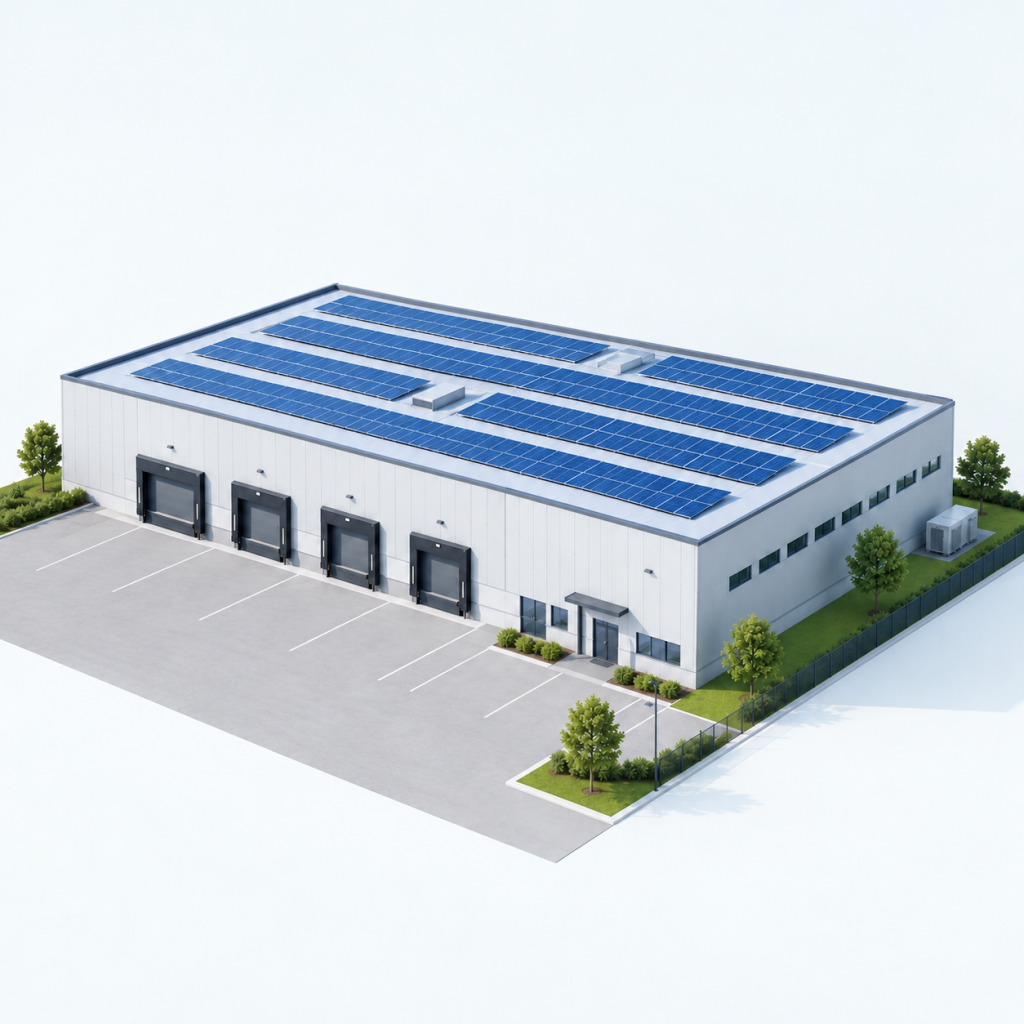
Let’s take the example of a company that leases large rooftops to install solar panels. Its sourcing process does not simply involve finding businesses with a suitable building. It needs to identify sites with genuine potential and check that they meet the relevant criteria.
The role therefore requires an understanding of the key characteristics that matter in B2B solar, knowing what information to look for and understanding what can make a site a valuable sales opportunity. For example, the employee needs to be able to distinguish between a building that initially appears relevant and a site that actually meets the company’s criteria.
This industry knowledge can nevertheless be passed on to a dedicated employee. The qualification criteria, tools and research methods are defined with the team. Once trained, the employee can take responsibility for researching sites, qualifying them and preparing the information needed by the sales team.
The role remains specialized. What changes is how certain stages of the process are distributed within the team. A specific part of the work can be handled remotely while remaining directly integrated into the company’s operations.
How a dedicated team can take on this role
The success of this type of role does not depend on finding someone who already knows the solar industry inside out. It depends on the ability to transfer the company’s way of working, business-specific criteria and methods to a dedicated employee.
This knowledge transfer is prepared together by ScaleMyCrew and the client company. At the beginning, we work with the teams to understand the role in detail, identify the qualification criteria, the information to look for, the tools used and the different stages of the process. These elements are then structured to help the employee quickly understand what is expected and how to carry out the work.
The employee gradually learns to identify relevant information and understand what makes an opportunity worth passing on to the sales team. Feedback then plays an essential role. It helps clarify which information is actually useful, flag insufficiently qualified opportunities and adjust the research criteria when necessary.
Skills are therefore developed progressively, with support from ScaleMyCrew and regular communication with the company. As the collaboration progresses, the employee gains autonomy while remaining aligned with the company’s methods, criteria and objectives.
It is this knowledge transfer, prepared and supported from the very beginning, that makes it possible for a dedicated team to take on a role that nevertheless requires in-depth industry knowledge.
What this approach changes for the team
The first benefit is the time freed up for sales teams. A significant part of the research and qualification work is handled upstream, allowing salespeople to spend more time talking to prospects, attending meetings and following up on opportunities.
The second is the quality of sales preparation. When information is researched and structured according to predefined criteria, salespeople have access to more immediately usable information. They can therefore focus their time on assessing the opportunity rather than starting the research process from scratch.
The third is the company’s ability to increase its prospecting capacity. A dedicated team makes it possible to add specialized capacity without necessarily increasing the workload of existing teams to the same extent.
This does not mean that the dedicated employee replaces the sales team. In this example, qualification and preparation are handled remotely, while sales discussions, meetings and negotiations remain the responsibility of the team managing the prospect relationship.
The goal is therefore not to replace one function with another, but to redistribute the different stages of the same process so that each person can focus on the part of the work where their contribution is most valuable.
FAQ: what business leaders ask about specialized roles and remote teams
Specialization does not prevent remote work
A specialized role does not necessarily have to remain entirely in-house. When expertise and specific criteria can be transferred, part of the work can be entrusted to a dedicated team.
At ScaleMyCrew, we prepare this knowledge transfer with the company to structure the role, train the employee and support them as they become increasingly autonomous.
If you’re wondering which part of your own business could be handled remotely, let’s talk.
Publié le 12/10/2026