



The human resources function is evolving in response to businesses’ needs. What was once primarily administrative work, including contracts, payslips and leave management, has become a strategic pillar on which business growth, compliance and the ability to attract the right talent depend.
This article explores human resource management from every angle: its definition, key responsibilities, education and training, an overview of HR careers, digitalisation and outsourcing options for European SMEs.
Why HR has become a strategic function
Human resources refers to all the employees within an organisation, while human resource management encompasses the practices that ensure the availability, skills and engagement of human capital. Between 2020 and 2026, three major forces reshaped the scope of HR. First, remote work: around 90% of European regions had returned to or exceeded their pre-COVID employment levels, thanks to services that can be performed remotely. Second, the talent shortage: in 2024, 11% of job vacancies in Europe remained unfilled, directly hindering SME growth. Finally, the increasing complexity of European employment law, including the right to disconnect, GDPR obligations and diversity reporting, requires constant vigilance.
HR has therefore become strategically important for business growth, compliance and employer attractiveness. Well-trained and motivated employees contribute to overall performance, while a strong employer brand makes a difference when competing with large corporations for talent. HR must also ensure compliance with labour law and regulations, as failure to do so can result in fines or damage to the company’s reputation as an employer.
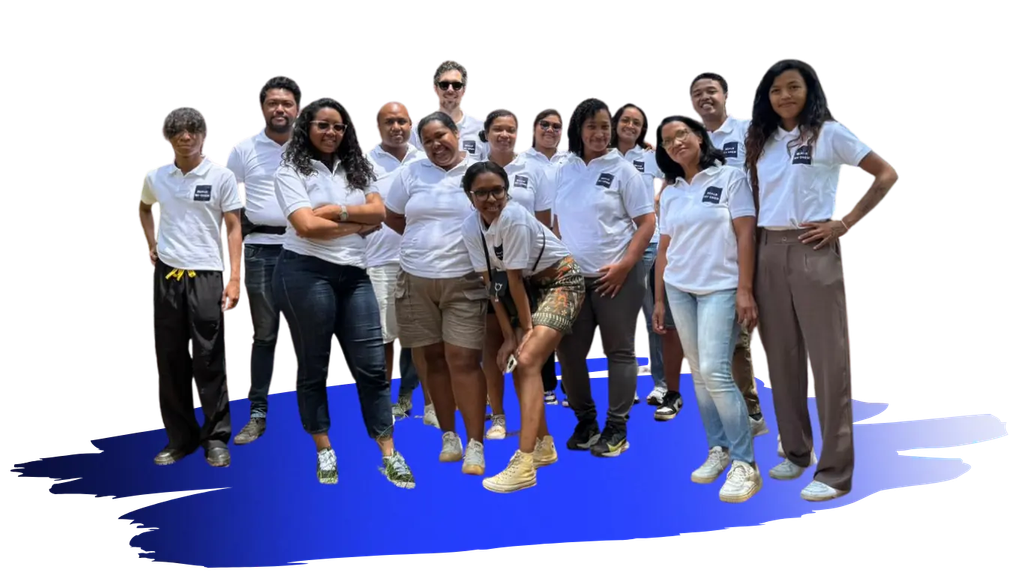
Against this backdrop, ScaleMyCrew, a Franco-Belgian group founded in 2025, supports European micro-businesses and SMEs looking to organise or strengthen their HR function by building dedicated HR teams in Madagascar. These teams are integrated into each company’s tools, working hours and culture, within a framework aligned with European requirements.
In the following sections, you will find a definition of the HR function, its operational responsibilities, related careers and salaries, emerging practices (AI, data and social media), and practical outsourcing options involving dedicated teams in Madagascar.
Definition and scope of the Human Resources function
Human resources designate all the contributors of an organization. By extension, human resources management (HRM) brings together the practices that aim to guarantee the availability, competence and commitment of human capital within the company.
The strategic alignment of human resources ensures the availability of competencies necessary to the company. The HR function manages the personnel necessary to the organization, and its scope covers very diverse areas:
- Recruitment: sourcing, interviews, selection, job offer.
- Integration (onboarding): contract, employee file, tool training, mentoring.
- Personnel administration and payroll: CDI/CDD employment contracts, amendments, leave, sick leave, pay variables.
- Training and development: annual plan, professional interviews, certifications.
- Career management and mobility: promotions, position changes, internal mobility.
- Quality of life and working conditions (QLWC), formerly known as QWL (Quality of Working Life): health, safety, prevention of psychosocial risks.
- Social dialogue: CSE (Social and Economic Committee), collective negotiations, company agreements.
Administrative management includes monitoring employment contracts and absences, and the HR function also covers social relations within the company. Human resources contribute to quality of life at work and the prevention of psychosocial risks. Compliance is cross-cutting: national labor law, collective agreements, social law, GDPR applied to employee data, including when outsourcing involves a transfer outside the EU, which requires standard contractual clauses and rigorous risk analysis.
It is useful to distinguish the “support” HR function (administration, payroll, compliance) from the “business partner” stance, where the HR manager intervenes closest to operational teams to anticipate needs and align human objectives with the company’s strategy. In an SME, this role can be held by an outsourced professional or a dedicated offshore team, capable of handling part of the HR assignments.
The current major challenges of the human resources function
Between health crises, inflation and the multiplication of recruitment challenges, HR challenges have accelerated. Here are the five subjects that concentrate the most attention from SME executives.
- Attractiveness and retention. Human resources help reduce turnover by promoting employee integration and recognition. For a 25-person SME, losing a key contributor can represent six months of productivity, and a recruitment cost equivalent to 6 to 9 months of salary. Labor shortages affecting health, construction and technical professions are forcing companies to rethink their retention policies.
- Skills development: digital, AI and data. The sector now requires mastery of analytical tools, data-driven management and artificial intelligence. Yet, only one in three HR Directors considers their function sufficiently equipped to leverage these technologies.
- Engagement and well-being. More than 20% of employees suffer from work-related stress. Hybrid work, while offering flexibility, also creates risks of isolation and overload that the HR function must anticipate through concrete prevention actions.
- Inclusion and diversity. Reporting obligations on gender equality, disability and non-discrimination are strengthening across the EU. Candidates themselves are including diversity among their criteria for choosing an employer.
- Workforce and career path management (WEPM), formerly known as Forward-looking Workforce and Skills Management (FWSM). Forward-looking skills management is essential for HR. Human resources must anticipate future personnel and competency needs over a three to five year horizon: map current know-how, identify professions under tension, plan training and, if necessary, resort to external or offshore resources to fill the gaps.
The operational missions of human resources management on a daily basis
Despite its strategic aspect, human resources management brings together several operational missions, which follow the employee’s journey within the company.
Recruitment, from needs definition to job offer. Everything starts with a framing session with the manager: the sought profile, the budget and the timeline. The HR department then writes the offer and distributes it on job boards and professional networks such as LinkedIn. It sorts applications, then conducts structured interviews to compare candidates on the same criteria. The more precise this initial framing, the less time the recruiter wastes on off-topic applications. Recruitment does not stop at signing. The selected person must still find their place in the team.
Onboarding, to succeed in the first 90 days. This is where integration comes in. Before arrival, the HR department prepares the contract, carries out the DPAE (pre-employment declaration) (in France), which replaced the former DUE (single employment declaration) and constitutes the employee file. On day one, it organizes the welcome, the handover of equipment and training on internal tools. A mentor is designated to answer everyday questions, and regular check-ins are scheduled over the first three months. This monitoring allows early detection of discomfort or a mismatch with the position, before it turns into a resignation during the trial period.
Personnel administration and payroll. Once the employee is in post, the HR department manages their administrative situation month by month. It establishes contracts (CDI, CDD, part-time) and their amendments, monitors leave, absences and sick leave, then transmits variable pay elements to the service provider or HRIS software (human resources information system). This work must remain compliant with the applicable collective agreement and social regime. An error on a payslip is immediately visible and quickly undermines employee trust.
Training and professional development. Once administration is in order, the HR department can prepare what comes next and help contributors grow in their profession. It builds an annual development plan based on needs reported by managers, conducts mandatory professional interviews in France, monitors certifications and seeks funding from OPCOs (competency operators) or European funds. These interviews also serve to prepare internal mobility. An employee who sees a possible future within the company has less reason to look for it elsewhere.
Social dialogue. All these decisions (salaries, training, working conditions) are discussed with employee representatives. In France, a social and economic committee (CSE) becomes mandatory from 11 employees. Negotiations cover in particular salaries, gender equality and remote work. The HR department prepares these exchanges, provides data and ensures compliance with signed agreements. It is this dialogue that allows the choices made at previous stages to be accepted.
Key competencies and expected qualities in human resources
The function requires a balance between technical expertise and human qualities. Competencies in labor law are indispensable for HR, as is mastery of payroll, payroll mass and HRIS. Solid knowledge in accounting and social management control complete the profile.
On the soft skills side, confidentiality, empathy, capacity for analysis and synthesis, assertiveness and an advisory stance toward management make the difference. An HR professional must know how to manage conflict situations and support managers in their decisions within the organization.
In France, approximately 40,000 professionals work in HR, and HR professionals represent 2% of the workforce. Digital culture has become essential: ease with collaborative tools, monitoring of indicators (turnover, absenteeism, QLWC) in dashboards, use of social networks for employer branding.
Finally, mastery of English and the capacity to operate in multicultural environments are major assets for managing distributed teams, such as contributors in France, Belgium and Madagascar within the same offshore outsourcing setup.

Studies and training for working in human resources
HR professions are accessible at several qualification levels, from two years post-baccalaureate to five years and beyond through certifications and continuing education.
Short post-baccalaureate programs. The BTS in SME management is prepared over two years and opens the way to positions as HR assistant, payroll manager or personnel administrator, often through work-study or a company internship. The BUT GEA is prepared over three years after the baccalaureate and offers an HRM pathway with a strong practical dimension.
Bachelor’s degrees. A professional bachelor’s degree in HR is accessible after two years post-baccalaureate, allowing rapid specialization (payroll, social law). Management bachelor’s degrees with an HRM pathway or AES degrees with an HR pathway serve as springboards toward a master’s degree or direct employment, with selection via Parcoursup in France and equivalents in Belgium.
Master’s degrees and long programs. HR professions often require a minimum five-year degree in the field to access strategic functions. A master’s in HR is required for positions as HR Director, compensation manager or HR studies officer. Business schools also offer specialized HR master’s degrees recognized by the market.
Career change and continuing education. In France, 83% of working adults say they are ready for or in the process of a career change, and short certifications (6 to 12 months), payroll manager, talent acquisition specialist, HR Business Partner, offer fast-track entry with RNCP recognition. Some programs also include a motivation interview. The CPF and collective transition schemes facilitate financing.
Digitalization of the HR function: HRIS, AI, data and social networks
The digital transformation has profoundly changed the human resources function. In 2026, even small structures have access to tools once reserved for large groups.
Human resources information systems (HRIS) centralize employee files, automate validation workflows (leave, absences), produce dashboards with management indicators: turnover, absenteeism, average cost per employee, departure forecasting. Social management control relies on this data to guide strategy.
AI and data are transforming recruitment (automatic CV sorting, skills-position matching), the detection of turnover risks and the analysis of QLWC surveys. But these technologies raise ethical challenges: algorithmic bias, transparency, respect for non-discrimination and personal data protection.
Social networks play a key role in HR strategy : LinkedIn for sourcing, Instagram and TikTok for employer branding, monitoring of e-reputation. ScaleMyCrew relies on these tools to source and evaluate talent in Madagascar, combining AI and human expertise while respecting European constraints.
HR outsourcing and dedicated teams in Madagascar: an option for small and medium-sized businesses
Faced with the skills shortage and budget constraints, HR outsourcing represents a concrete measure for small and medium-sized European organizations.
A dedicated offshore team is a group of contributors, HR assistant, payroll manager, recruitment officer, HR analyst, based in Madagascar, integrated into the tools, hours and culture of the client SME. They work in French or English, with full time overlap with Europe.
The benefits are direct: access to technical competencies (payroll, recruitment, HR data) at controlled costs, service continuity, flexibility to scale up the team according to growth. European compliance is guaranteed through contracts compliant with Article 28 of the GDPR, SCC clauses, NDAs and security audits.
Some typical use cases:
- Tech start-up entrusting a talent acquisition unit to Madagascar, operational in four to eight weeks.
- SME of 20 to 50 employees outsourcing recruitment sourcing or payroll preparation.
- Accounting firm delegating the HR and personnel administration part.
FAQ: frequently asked questions about human resources for SMEs
What is human resources management ?
Human resources management (HRM) encompasses all activities aimed at effectively managing the human capital of an organization. This includes recruitment, personnel administration, training, career management, payroll, as well as quality of life at work, in order to ensure the availability of competencies and contributor engagement.
Why is the HR function strategic for an SME ?
The HR function is essential because it guarantees that the company has the talent necessary to achieve its objectives. It promotes employee engagement and retention, ensures compliance with labor law and regulations, and directly contributes to the performance and sustainable growth of the SME.
What training is recommended for working in human resources ?
HR training ranges from the BTS in SME management to the specialized master’s in HR. Professional bachelor’s degrees and short certifications also allow rapid access to operational positions, while five-year degrees are often required for strategic and managerial functions.
How does digitalization transform the HR function ?
Digitalization optimizes HR processes through HRIS, artificial intelligence and data analysis. It facilitates automated recruitment, monitoring of key indicators (turnover, absenteeism), and strengthens employer branding via social networks, improving the efficiency and responsiveness of HR teams.
What are the advantages of HR outsourcing for an SME ?
HR outsourcing allows access to specialized competencies at lower cost, with flexibility adapted to company growth. It guarantees legal compliance, ensures service continuity and frees up time to focus on strategy, while benefiting from personalized support and dedicated teams, particularly in Madagascar.
Future prospects for the human resources function
The human resources function will strengthen by 2030. Generalization of hybrid and distributed teams, management by social data, the growing importance of CSR and QLWC challenges: the HR mission is becoming that of a genuine organizational architect, capable of supporting transformations, restructuring and skills developments linked to digital technology and AI.
Opportunities are real for recent graduates and professionals in career transition: demand is growing for experts in social law, HR data, employer marketing and change management. Players like ScaleMyCrew allow small and medium-sized businesses to remain competitive by pooling expertise, offering dedicated teams in Madagascar and lasting human and technological support.
Are you looking to structure or strengthen your HR function without blowing your budget? Discover how to build your dedicated team in Madagascar and turn your HR challenges into a competitive advantage.
Publié le 27/10/2026